Among daily computer and smart device peripherals, the mouse is the most prevalent input tool. Yet long before its emergence, an older device has maintained irreplaceable value in professional scenarios — the trackball. Originating from WWII military radar systems, it now serves medical imaging equipment, industrial control consoles and aerospace cockpits, standing firm in fields demanding high precision and dependability.
Among daily computer and smart device peripherals, the mouse is the most prevalent input tool. Yet long before its emergence, an older device has maintained irreplaceable value in professional scenarios — the trackball. Originating from WWII military radar systems, it now serves medical imaging equipment, industrial control consoles and aerospace cockpits, standing firm in fields demanding high precision and dependability.
1. Historical Origin: From Bowling Ball to Modern Input Gear
Invented 18 years earlier than the classic computer mouse, the trackball was initially developed for precise military radar operation.
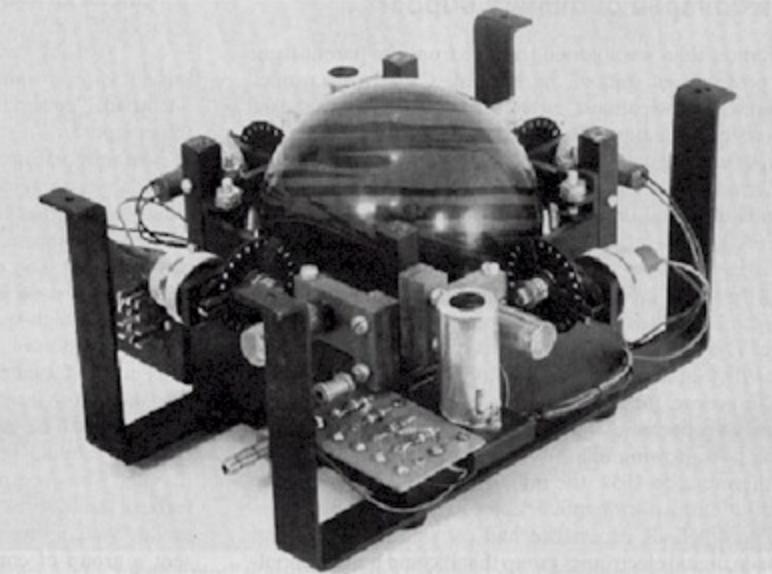
In 1946, British engineer Ralph Benjamin worked on the Comprehensive Display System (CDS), a post-war radar plotting project for the Royal Navy. Operators struggled to pinpoint and track aircraft targets with conventional joysticks, prompting Benjamin to create the roller ball system.
The early prototype adopted a metal sphere rolling atop two rubber-coated wheels, calculating movement direction and speed via wheel rotation detection. Patented in 1947, the technology was classified top-secret and kept away from public access due to military applications.
In 1952, inspired by Britain’s CDS system, engineers at Canada’s Ferranti Company developed the DATAR system for the Royal Canadian Navy, adopting trackball as the core input component. Surprisingly, they used a standard five-pin bowling ball weighing 3.6 kilograms as the rolling sphere. Fitted onto motion-sensing hardware, it converted ball rotation into cursor movement on screens.
The first civil-oriented trackball debuted in Germany in 1968. The well-known modern mouse was developed by Douglas Engelbart in 1963 and patented in 1967. Undoubtedly, the trackball is the true ancestor of modern computer positioning input devices.
2. Working Principle: Precision Control of an "Inverted Mouse"
Often confused with traditional mechanical mice for the rolling sphere design, trackballs operate fundamentally differently. A mouse moves its base together with the ball, while a trackball keeps its base stationary with only the sphere rolling freely.
Mechanical Trackball Mechanism
It consists of a rolling sphere, transmission shafts, grating wheels, infrared LEDs and photosensitive sensors.
- Finger or palm rotation drives the sphere and two perpendicular transmission shafts.
- Each shaft connects to a grid-patterned grating wheel.
- Infrared transmitters and phototransistors are mounted on both sides of each wheel.
- Rotation alternately blocks and transmits infrared light, generating square wave pulses.
- The built-in chip computes rolling distance and speed by counting pulse quantity and frequency.
- Direction is accurately judged through 90-degree phase differences of dual-channel signals.
Technological Upgrade: Optical Trackball
Optical trackballs have gradually replaced mechanical versions as mainstream products. Adopting non-contact optical sensing, they eliminate mechanical abrasion and extend service lifespan remarkably.
Working similar to optical mice:
- Diodes beneath the sphere emit continuous light.
- Rolling motion casts light onto tiny surface textures of the ball.
- Optical sensors capture reflected light signals.
- The control chip analyzes light variations to trace sphere movement.
This structure boosts dustproof and waterproof performance, making trackballs adaptable to harsh industrial and medical operating environments.
3. Core Advantages: Indispensable Value in Professional Scenarios
While conventional mice dominate consumer electronics, trackballs retain unrivaled strengths in medical treatment, industry and aerospace sectors.
-
Ergonomic Comfort
Regular mouse use requires frequent wrist and arm movement, easily triggering carpal tunnel syndrome. Trackballs only need fingertip manipulation with fixed arms and wrists, drastically reducing muscle strain. Practical tests show minimal wrist discomfort after four hours of continuous trackball use, contrasting obvious soreness caused by standard mice, ideal for long-hour working professionals.
-
Millimeter-level Positioning Accuracy
Fingertip manipulation achieves finer control than wrist movement. Trackball performance stays unaffected by uneven desktop surfaces, enabling precise marking and measurement on CT and MRI scans, delicate 3D model adjustment and stable surgical robot operation.
-
Strong Environmental Adaptability
Usable on laps, sofas and bumpy vehicles without flat surfaces. Sealed designs reach up to IP68 protection grade, stable against oil stains, dust and humid industrial conditions.
-
Space-saving Design
A standard mouse needs a 30×30-centimeter sliding area, whereas trackballs only occupy the space of the device itself, perfectly fitting compact cockpits, ship control desks and multi-screen workstations.
4. Wide Application Coverage
Medical Industry
The largest trackball consumption sector, accounting for 40.3% of the 2025 market procurement volume. Applied in B-ultrasound, CT, MRI and PET imaging workstations, surgical robot control systems, intensive care monitors and disinfection-ready portable medical devices.
Industrial Control
A traditional dominant field with a market scale of 2.48 billion yuan in 2023, enjoying a 67% penetration rate in robotic arm and numerical control machine operation. Widely used in automated production lines, intelligent warehousing, automobile manufacturing and 3C assembly workshops.
Aerospace and National Defense
Featured with shock resistance and anti-interference capability, trackballs serve as standard equipment on Airbus A380 and A350 aircraft, military vessel radar consoles, fighter jet control panels and space ground monitoring stations.
Other Fields
High-frequency financial trading terminals, CAD design platforms, public self-service kiosks and large-scale security monitoring command centers.
5. Zhuhai Xinhe Power: Professional Trackball Solution Provider for Medical and Industrial Use
Founded in 1999, Zhuhai Xinhe Power is a national high-tech enterprise with 27 years of R&D and manufacturing experience in power supplies and trackballs. It delivers high-reliability trackball solutions for medical, industrial and aerospace industries, selling products to over 90 countries and regions and serving more than 900 global clients.
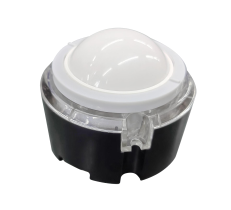
XH-P50 High-performance Optical Trackball
- 50mm large sphere for comfortable handling and precise control
- 400 DPI high resolution supporting millimeter positioning
- Non-contact optical sensing free from mechanical wear
- Outstanding EMC stability under strong electromagnetic interference
- Multiple optional interfaces: USB, PS2, RS232
- Medical-grade waterproof and dustproof rating, alcohol disinfection accessible
- Wide operating temperature range: -20℃ to +60℃
- Customizable OEM and ODM services for appearance, interface and functions
Certified with ISO13485 medical quality management system, CB, CE and TUV safety approvals, the XH-P50 series fits industrial automation, medical imaging, robotics, ship systems and human-machine interfaces. The company also supplies G50 mechanical trackballs and P25 compact optical trackballs with sphere sizes ranging from 19mm to 50mm to meet diverse demands.
6. Future Development Trends
-
High-precision Sensor Upgrade
High-sensitivity Hall sensors will gain popularity, combined with inertial measurement units and pressure sensors to realize 3D interactive control for VR and 3D modeling.
-
AI Intelligent Integration
Embedded algorithms learn user habits to adjust sensitivity automatically, alongside fatigue monitoring functions to prevent occupational injuries.
-
Wireless Low-power Evolution
BLE 5.4 and Matter protocols enable cross-device connection, and optimized power management supports over 300 days of standby duration.
-
Accelerated Domestic Substitution
Included in national core human-computer interaction component support policies, trackball domestic production will witness rapid growth and market expansion opportunities.
Conclusion
Over 80 years since its birth in 1946, the trackball has evolved from confidential military technology into essential precision input equipment across multiple professional fields. Despite emerging touch and voice control technologies, it remains irreplaceable in high-precision and high-stability working scenarios.
Adhering to professionalism, innovation and reliability, Zhuhai Xinhe Power will keep upgrading product quality and global services, driving the steady advancement of China’s trackball industry.

